01
CSLB proof requirement
Active California contractor licensees and applicants must provide CSLB with a certificate of workers' compensation insurance, a DIR self-insurance certificate, or a valid exemption when allowed.
California requires employers, including construction employers, to carry workers' compensation when they have employees. The Contractors State License Board also requires active licensees or applicants to file proof of workers' comp coverage, self-insurance, or a valid exemption; some license classifications, including roofing and concrete, must carry coverage even with no employees. California is not an NCCI state, the Workers' Compensation Insurance Rating Bureau of California (WCIRB) administers the classification and experience-rating system.
10+ carriers shopped · Serving California contractors · Regulated by CA CDI
Every state regulates commercial insurance differently. Here's what matters for workers' comp in California.
Active California contractor licensees and applicants must provide CSLB with a certificate of workers' compensation insurance, a DIR self-insurance certificate, or a valid exemption when allowed.
California generally allows some no-employee contractors to file an exemption, but CSLB requires certain classifications, including C-8 concrete, C-20 HVAC, C-22 asbestos, C-39 roofing, and C-61/D-49 tree service, to carry WC or self-insurance even without employees.
California uses WCIRB classifications rather than NCCI codes. Carrying over a code from another state can misstate payroll exposure and lead to audit problems.
Out-of-state contractors performing work in California still need to satisfy California labor, workplace safety, and workers' compensation requirements for employees working in the state.
Rates vary meaningfully by state because class codes, litigation climate, medical costs, and regulatory requirements all differ. Here's the California picture.
California WC is heavily driven by WCIRB class codes, payroll, experience modification, and jobsite safety. Roofing, concrete, HVAC, asbestos abatement, and tree service receive special licensing attention because of injury severity. Los Angeles, Bay Area, and wildfire-rebuild work can produce tighter underwriting because labor, medical, and claim costs are higher than many inland markets.
Want a California workers' comp quote checked against your contract?
Send the insurance schedule or certificate requirements. We match the workers' comp terms before bind.
State law is only one part of the buying decision. Commercial contracts often impose stricter insurance requirements than the legal minimum.
GCs usually require proof that the policy applies to work performed in California, with the right legal entity and effective dates.
Most commercial contracts ask for employer liability limits of at least $500K / $500K / $500K; larger projects may require higher limits.
Contracts and audits can turn on whether owners, members, and officers are included or excluded. We verify the election before bind.
If you hire subs, collect their WC certificates before work starts. Uninsured subs can become your payroll exposure at audit or your claim exposure after an injury.
The fastest quotes come from clean underwriting data. These are the items competitors often hide behind a generic form.
Have two or three of these items? We can start the California quote.
A licensed broker will tell you what is missing instead of forcing you through a generic intake form.
Core coverage is the same nationwide. California-specific regulations layer on top of these baseline protections.
Emergency room, surgery, follow-up care, physical therapy, prescriptions, and long-term rehab when a crew member is injured while working. No deductible to the employee.
Partial wage replacement while the injured worker is off the job, typically around 66% of weekly wages, subject to state maximums and waiting periods.
If an injury leads to permanent impairment, the policy pays scheduled benefits based on the body part or percentage loss as defined in the state fee schedule.
Funeral expenses and ongoing benefits to the spouse and dependents if a worker is killed on the job. State statutes govern the benefit structure.
Protects you from tort suits brought by an employee (or the employee's spouse) that fall outside the comp-exclusive remedy. $500K / $500K / $500K is standard baseline.
Carrier handles the whole file, claim intake, medical case management, return-to-work coordination, settlement negotiation, and appeal if contested.
| Factor | Impact | Detail |
|---|---|---|
| Class code (trade) | Major | Single biggest driver. Roofing at $15-$25 per $100 payroll; inside electrical around $3-$6; clerical under $1. Your class code IS your premium. |
| Annual payroll | Major | Premium is charged per $100 of payroll. More payroll = more premium, proportionally. |
| Experience mod (ex-mod) | Major | After three years, your historical claim frequency and severity produces an ex-mod that multiplies your premium. 1.00 is neutral; 0.80 gets a 20% discount; 1.30 adds 30%. |
| State | Moderate | States have monopolistic funds (WA, OH, ND, WY) vs. open markets. Rates, assessments, and statutes vary widely. |
| Claims history | Moderate | Five-year loss run determines carrier appetite and pricing. Multiple open indemnity claims narrow the market. |
| Owner inclusion/exclusion | Minor | Including owners adds payroll to the calculation. Excluding them drops it but removes their coverage. |
| Safety program & training | Minor | Formal safety program, OSHA training records, and drug testing can unlock 5-10% credits and move you into standard markets. |
California-specific questions first, then the general workers' comp questions.
Some can file a CSLB exemption, but not every classification can. CSLB requires several active classifications, including roofing and concrete, to carry workers' comp or valid self-insurance even when the contractor has no employees. Contract requirements can also force a ghost or owner-included policy.
No. California uses the WCIRB classification and experience-rating system. If you operate in multiple states, do not assume your NCCI class code maps cleanly to California.
Every state except Texas requires WC once you have W-2 employees. Even Texas, while technically optional, leaves you exposed to unlimited tort liability if you don't carry it, and most general contractors won't sub to an uninsured shop. If you have even one W-2 employee doing trade work, you need it.
If a 1099 sub carries their own WC and provides a certificate, they don't hit your policy. But if a sub is uninsured and gets hurt on your job, most states make you the statutory employer, meaning the claim falls on your policy. Always collect and verify sub COIs before they start work.
WC premium = (annual payroll ÷ 100) × class rate × experience mod. Rates range from under $1 per $100 for clerical to $25+ for roofing. A $1M payroll general contractor with a 1.00 ex-mod and a mid-range blended class rate typically pays $25,000 - $60,000 per year. Roofers and demolition contractors pay materially more.
It depends almost entirely on the trade class code and the wage. Because premium is charged per $100 of payroll, a $60,000-a-year clerical worker might generate only a few hundred dollars of WC premium, while a $60,000-a-year roofer can generate $9,000-$15,000+ at typical roofing rates. Multiply the employee's annual wage by the class rate (per $100) and your experience mod to estimate it. These are illustrative figures, not quotes; we calculate the real number against your exact payroll by class code.
After three years of claim history, NCCI (or your state's bureau) calculates an ex-mod, a multiplier applied to your premium. 1.00 is neutral; anything below 1.00 earns you a credit (fewer / smaller claims than peers); anything above 1.00 adds a debit. A 0.80 ex-mod saves 20% of premium; a 1.30 ex-mod costs 30% extra. It's the biggest single lever you can pull over time.
Most states allow sole proprietors, LLC members, and corporate officers to exclude themselves, which drops them from the payroll calculation and lowers premium. But excluded owners have no WC coverage for their own injuries. If you exclude yourself, make sure you carry health insurance and disability coverage to fill the gap.
A ghost WC policy covers a business with no employees (or only excluded owners), purely so you can provide a WC certificate to GCs that require it. It's cheap, often $800-$1,500 per year, and solves the common problem of being uninsurable-by-contract without actually needing coverage.
The going-and-coming rule generally excludes ordinary commuting. But if you're driving between job sites, running an employer errand, or carrying tools to the site as part of the job, the injury is typically covered. Facts matter, each claim gets investigated.
WC covers employee injuries. GL covers third-party claims. They are mutually exclusive. Every contractor needs both, and neither one substitutes for the other. GC contracts almost always require certificates showing both.
A single large claim ages into your ex-mod calculation over three years. Severity hurts, but frequency hurts more, three small claims often raises the ex-mod more than one large one. This is why return-to-work programs and early claim management matter financially even for minor injuries.
Most states require WC for family employees the same as any employee, though some states carve out exemptions for spouses and minor children. Check your state's specific rule, we'll verify at bind.
The California-specific coverage questions that decide whether a claim is paid or a certificate is accepted. Each is a full breakdown for California contractors.
Most jobs require more than one policy. Round out your insurance program with the coverages GCs, owners, and lenders commonly ask contractors to carry.
 CA coverageGeneral LiabilityGeneral Liability insurance for California contractors
 CA coverageBuilder's RiskBuilder's Risk insurance for California contractors
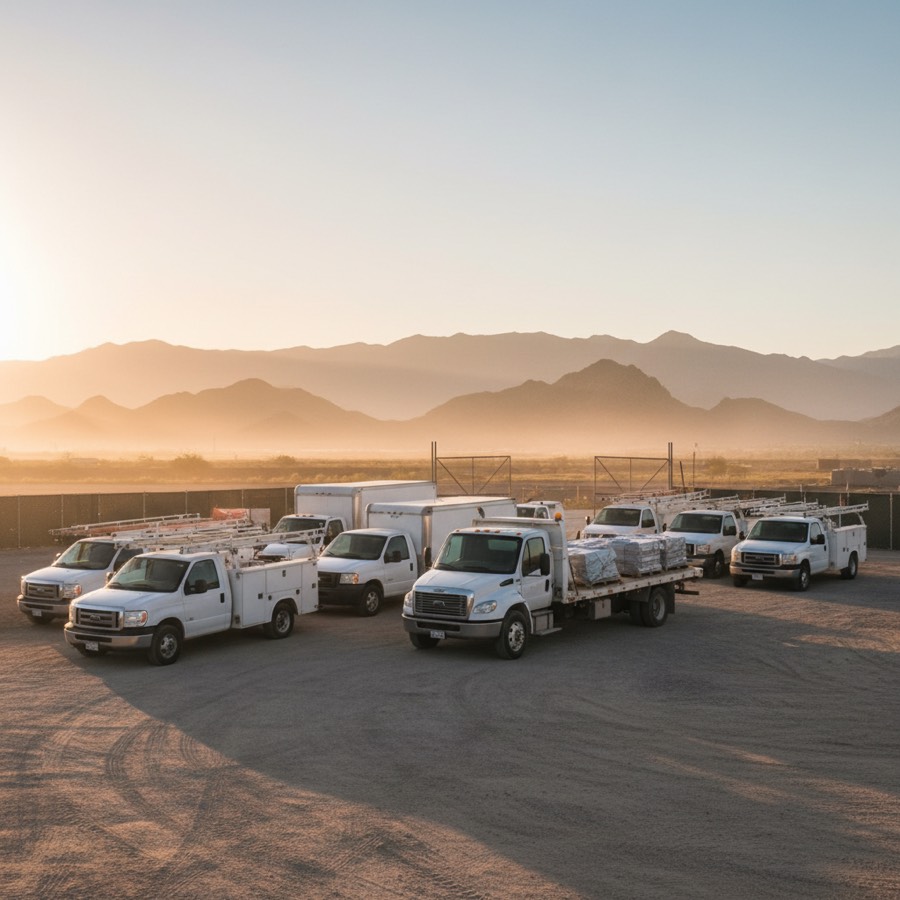 CA coverageCommercial AutoCommercial Auto insurance for California contractors
 CA coverageUmbrella & ExcessUmbrella & Excess insurance for California contractors
Tell us your trade. We typically send quote options in 2 hrs after we have the required information. No fee. No obligation.